How to Spot a Fake Insurance Policy
A real policy can be confirmed directly with the insurer or your state, and a legitimate agent will never try to stop you from checking.
Call the insurer directly, not the number on the card
The surest way to spot a fake policy is to contact the insurance company yourself, using a phone number you find on its official website, not the one printed on the card or the paperwork you were given. Ask them to confirm your policy number and that it's active. If they have no record of it, or the company doesn't exist, you have your answer.
This matters more for older drivers because fake or lapsed policies are sometimes sold through unlicensed agents or informal networks that target people looking for a lower rate. A real insurer will always be able to confirm your coverage on the spot. One that can't, or an agent who discourages you from calling, is a sign something is wrong.
Whether the agent is licensed in your state
Every state has an insurance department that licenses agents and companies to sell coverage there. You can search that license on your state's insurance department website, usually by the agent's name or license number.
If the agent can't give you a license number, or the number doesn't match their name when you search it, stop there. A licensed agent expects to be checked and won't treat the request as unusual.
This check also tells you whether the company itself is authorized to sell insurance in your state. Some fake policies come from real companies that aren't licensed where you live, which makes the policy worthless even if the company is legitimate elsewhere.
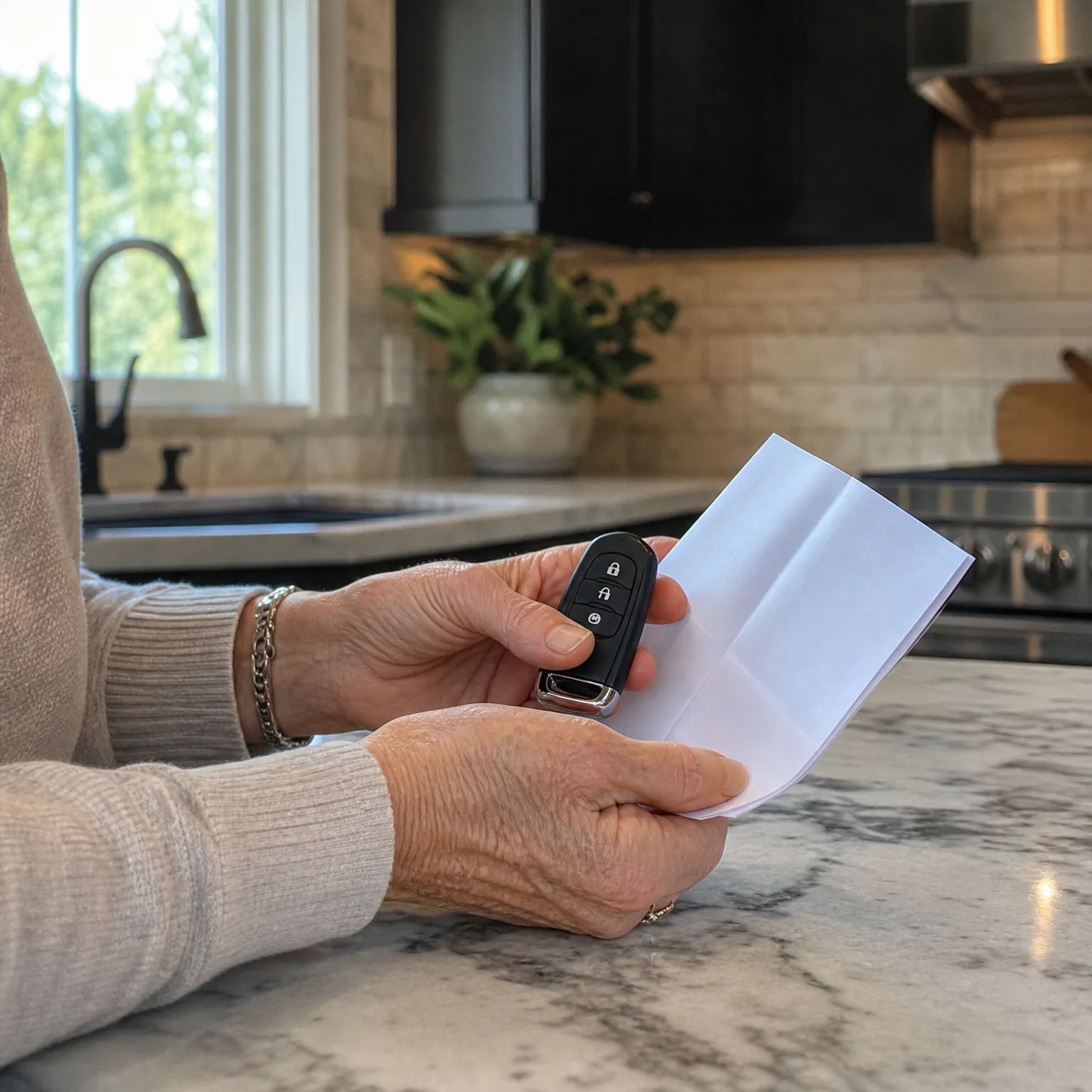
If you're helping a parent with this, ask to see the actual policy document, not just a card or a receipt, and run the same check yourself before anything is paid for.

What a real policy document always includes
A genuine auto policy comes with a declarations page that lists your name, your vehicle, your coverage limits, and your premium, all specific to you. If what you were given is a generic form, a photocopy with blanks filled in by hand, or a document with no policy number, that's reason to question it.
Real insurers also send renewal notices before a policy expires and give you a way to pay online or through the mail. If the only way to pay is cash, a wire transfer, or a payment app to a personal account, that's not how legitimate insurers collect premiums.
It's also worth asking for proof the policy was filed with the state, since most states require insurers to report active auto policies. Your state's DMV or insurance department can tell you how to confirm this and what it should show.
Questions people ask about this
What happens if I've been driving on a fake insurance policy?
You're treated as uninsured, even if you believed you had coverage and paid for it. If you're in an accident, you could be personally responsible for the other driver's damages, and your state may suspend your license or registration for driving without proof of insurance. Report the fake policy to your state's insurance department as soon as you discover it.
Can I check if my insurance company is real before I buy a policy?
Yes, through your state's insurance department website, which keeps a list of companies licensed to sell coverage there. Search the company's exact name before you pay anything. If it doesn't appear, or the name is close but not exact, that's worth asking about directly.
Why would someone sell a fake car insurance policy?
Usually to collect a premium for coverage that doesn't exist, or to offer a lower price than a real insurer could. Drivers who are having trouble finding affordable coverage, including some older drivers after a claim or a lapse, are sometimes targeted because they're more motivated to accept an offer without checking it.
Does my state send a notice if my insurance is fake or canceled?
Many states require insurers to report when a policy is canceled or never properly issued, and the state may then contact you or flag your registration. This process differs by state, so ask your DMV or insurance department how it works where you live and what to expect if your coverage is found to be invalid.
Should I get a second opinion before switching insurers?
It's reasonable to check any new policy against your current one before you cancel anything. Compare the declarations page, the license of the agent or company, and the payment method, and don't cancel your existing coverage until the new policy is confirmed active with the insurer directly.
If you want coverage you can verify without second-guessing it, compare quotes from licensed insurers here.
Before you pay for any policy, find the insurer's official phone number yourself and call to confirm the policy number is active. Search your state insurance department's website for the agent's license and the company's name. Ask for the full declarations page, not just a card, and check that your name, vehicle, and coverage limits are listed correctly. If anything feels rushed or the only payment option is unusual, stop and ask your state's insurance department how to verify the policy before you proceed. If you're helping a parent through this, sit with them for the phone call so you hear the confirmation yourself.